vendredi 1 août 2008

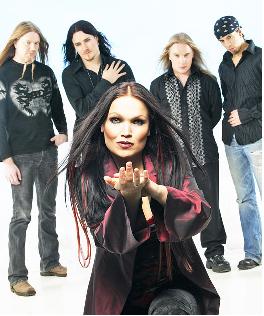
Nightwish


http://www.musicfolio.com/modernrock/nightwish2004.jpg

Nightwish
is a Finnish symphonic power metal quintet, formed in 1996 in the town of Kitee, Finland. Nightwish is considered one of the bands responsible for the development and rise in popularity of symphonic metal at the end of the 1990s, as well as the creation of the subgenre symphonic power metal.

Although they have been prominent in their home country since the release of their first single, “The Carpenter” (1997) and debut album Angels Fall First, they did not achieve worldwide fame until the release of the albums Oceanborn and Wishmaster, which were released in 1998 and 2000 respectively. Their 2004 album, Once, led to Nightwish video clips being shown on MTV in the United States and inclusion of their music in U.S. movie soundtracks. Their biggest U.S. hit single, “Wish I Had an Angel” (2004), made it onto three U.S. film soundtracks as a means to promote their North American tour. The band produced three more singles and two music videos for the album, as well as “Sleeping Sun”, from the 2005 “best of” compilation album, Highest Hopes, prior to vocalist Tarja Turunen’s dismissal.

In May, 2007, former Alyson Avenue frontwoman, Swede Anette Olzon, was revealed as Turunen’s replacement, and in the autumn, the band released a new album Dark Passion Play, for which the band is currently touring.

History

Nightwish demo (1996)

Based on the musical experimentations of Holopainen, the original band concept was to create acoustic music. The band featured only keyboards, acoustic guitars, and the classical vocals of Turunen. The three musicians recorded their self-titled acoustic demo in the winter of 1996. The name “Nightwish” was derived from the first song the band recorded together, and the first demo also included early versions of “The Forever Moments” and “Etiäinen”.

After recording the Nightwish Demo, Holopainen decided that Turunen’s operatic voice was too powerful for an acoustic band, and decided to add in heavy metal elements, including electric guitars and drums.

Angels Fall First (1997)

Main article: Angels Fall First

In early 1997, following the release of the Nightwish Demo, Jukka “Julius” Nevalainen joined the band, and acoustic guitar was replaced with electric guitar. The addition of heavy metal elements to the band's existing experimental style gave the band a unique sound, forming the core of the Nightwish sound.

The band entered the studio in April 1997 to record seven songs for their second demo, entitled Angels Fall First. As a precursor to their debut full length album of the same name, the demo made its way to the Finnish record label Spinefarm Records in May 1997. The label signed Nightwish to a two album deal, and the band returned to the studio to re-record songs from their second demo. The full length album Angels Fall First was released internationally in November 1997 and reached number 31 on the Finnish album charts, with the single “The Carpenter” reaching number 3 on the Finnish singles chart. “The Carpenter” single was released as a split with label mates Children of Bodom and Thy Serpent.

“Angels Fall First” is one of the two albums which features keyboardist Tuomas Holopainen's vocals (other one is “Dark Passion Play”), appearing on four of the album's eleven tracks, alongside vocalist Tarja Turunen.

Critical reception of Angels Fall First was mixed, with Allmusic rating the album 2 out of 5 stars, and The Metal Observer stating that Nightwish’s debut album “paled drastically in comparison to their later work," although it remains a fan favorite.

In December 1997, after over a year of existence, Nightwish made their live debut in their hometown Kitee, Finland. During the winter of 1997 and 1998, the band performed only seven times, due to Nevalainen and Vuorinen’s obligatory Finnish military service, and Turunen finishing her schooling.

Oceanborn (1998–1999)

Main article: Oceanborn

Following a string of live shows in Finland, the band filmed their first video clip for “The Carpenter” in April 1998. Nightwish completed their touring line up in the summer of 1998 when bassist Sami Vänskä, an old friend of Holopainen, joined the band. Nightwish then returned to the studio in August 1998 as a five-piece, to record their follow up album for Spinefarm records.

On October 7, 1998, Nightwish released their second full length album, Oceanborn, in Finland only. Adopting a more technical and progressive sound than Angels Fall First, Oceanborn saw the band abandon much of the ambient and folk elements present on their debut release. In contrast to the female vocals of Turunen, the album also featured guest growling vocals by Tapio Wilska (ex-Finntroll).

Oceanborn was well received, with Allmusic writing that the album “as a whole works great”, with songs that are “very strong”. Oceanborn was an instant success in Finland, reaching number 5 on the Finnish album charts. The album’s first single, “Sacrament of Wilderness”, hit number 1 on the Finnish singles charts, where it stayed for several weeks. The album’s release was initially limited to Finland, but due to the success of “Sacrement of Wilderness”, Spinefarm released Oceanborn internationally in the spring of 1999.

In May 1999, Nightwish recorded the single “Sleeping Sun (Four Ballads of the Eclipse)”. In one month the single sold 15,000 copies in Germany alone. Following the band’s first international success, Nightwish was added as the opening band for Rage’s 1999 European tour. Both the album Oceanborn and the single “Sacrament of Wilderness” were certified gold in Finland in August 1999.[5]

Wishmaster (2000)

Main article: Wishmaster (album)

While in the studio in early 2000 working on their third album, Nightwish was accepted in the Finnish Eurovision Song Contest with the song “Sleepwalker”. (sample ) Despite winning the public vote, Nightwish eventually finished in second place, with the jury choosing local gospel singer Nina Åström to represent Finland.[5]

In May 2000 Nightwish released their third studio album Wishmaster which debuted at #1 on the Finnish album charts, and following three weeks at number one, was certified gold in Finland.[5]

Critical response to the album was mixed, with Allmusic citing the album as repetitive, and saying “as a whole album, it can be a little annoying, even frustrating”. However, German magazine Rock Hard declared Wishmaster “Album of the Month”, despite competing against long-awaited May releases from Iron Maiden and Bon Jovi.

Following the release of Wishmaster, Nightwish embarked on their first world tour, playing dates in South America, Mexico, Canada, and the first headlining European tour with Sinergy and Eternal Tears Of Sorrow. In the summer the band returned to Europe, appearing at the Wacken Open Air festival and the Biebop Metal Fest.

Over the Hills and Far Away EP (2001)

Main article: Over the Hills and Far Away (album)

In 2001 Nightwish recorded a cover of Gary Moore’s “Over the Hills and Far Away” together with two new songs (“10th Man Down” and “Away”) and a remake of “Astral Romance” (from the Angels Fall First album). This was released as their first, and so far only, EP “Over the Hills and Far Away”.

The record included guest performances by Tony Kakko (from the power metal band Sonata Arctica) and Tapio Wilska (ex-Finntroll). They also released a VHS, DVD and CD with live material recorded in a show in Tampere, on December 29, 2000. All of these were entitled From Wishes to Eternity.

Nightwish’s version of “Over the Hills and Far Away” was well received by fans, being a repeating part of the band’s live performances and featuring on several compilation albums as well as the “End of an Era” DVD (in 2006). However, the other new songs never had a great break-through nor has been re-released in any way, as of January, 2008.

Shortly after the release, bassist Sami Vänskä was asked to leave the band, and Marco Hietala (Tarot, Sinergy) joined the band, effectively leaving Sinergy. Hietala would, apart from playing his instrument, also perform male vocals. Earlier, when needed, either Holopainen (on the Angels Fall First album) or a guest musician performed the male vocals. Holopainen has afterwards said that he and Vänskä still keep in touch, contrary to rumours saying that they haven't met since. However, they are not interested in making another project together. The reason of Vänskä’s dismissal was that he and Holopainen were too different as musicians, and this was seen as a threat to the band.

Century Child (2002–2003)

Main article: Century Child

In 2002 Nightwish released “Century Child”, along with the singles “Ever Dream” and “Bless the Child”. The main difference from previous albums is the use of a live orchestra from Finland on “Bless the Child”, “Ever Dream”, “Feel For You” and “The Beauty of the Beast”, to get a more present feeling of classical music. An enduring favorite of fans, though, is the band’s version of “The Phantom of the Opera”, from the famous musical of the same name by composer Andrew Lloyd Webber. The song was repeatedly played on concerts until vocalist Tarja Turunen was replaced with Anette Olzon, whereupon the band announced that they would never play the song live again.

"Century Child” was certified gold two hours after its release, and platinum two weeks afterwards. It set a record on the Finnish album charts as well; never before had the second been so distant from the first place. After the “Bless the Child” video, a second one was recorded, without any single support. The chosen track was “End of All Hope”. The clip contains pieces from the Finnish movie, Kohtalon kirja (English: The Book of Fate).

In 2003, Nightwish released their second DVD, entitled “End of Innocence”. The DVD tells the story of the band in Holopainen and Nevalainen’s words for two hours. The documentary also features bits of live concerts, exclusive footage, etc.

Vocalist Tarja Turunen also got married during the summer of 2003, and there were rumours that the band was about to be dissolved. These rumours were, at the time, proven to be false, as the band continued on to play concerts for another year and released another album. The marriage later meant a great part in Tarja’s dismissal from the band in the autumn of 2005.

Once (2004–2005)

Main article: Once (Nightwish album)
Nightwish live in 2004, during their “Once World Tour”. Left to right: Tuomas Holopainen (keyboards), Jukka Nevalainen (drums), Tarja Turunen (vocals), Marco Hietala (bass & vocals), Emppu Vuorinen (guitars).

Nightwish live in 2004, during their “Once World Tour”. Left to right: Tuomas Holopainen (keyboards), Jukka Nevalainen (drums), Tarja Turunen (vocals), Marco Hietala (bass & vocals), Emppu Vuorinen (guitars).

A new album entitled “Once” was released on June 7, 2004, along with their first single, “Nemo” (Latin for “nobody”), from that album. The single topped the charts in Finland and Hungary, and reached the top ten in five additional countries. “Nemo” therefore remains their most successful single release to date.

With Once, Nightwish started to produce so called orchestral versions of the most famous songs – versions where the music is more calmed down, excepting almost all drums and guitars (even though for example the orchestral version of “Nemo” includes an electric guitar solo). Famous songs that so far have been produced as orchestral versions are for example “Nemo”, “Ghost Love Score”, “Eva” and “Amaranth”.

Once utilizes a full orchestra in nine of the eleven songs on the album. Unlike Century Child, Nightwish decided to look for an orchestra outside of Finland this time, choosing the London Philharmonic Orchestra. It is also their second album to feature a full-length song in Finnish, “Kuolema tekee taiteilijan” (English: “Death Makes an Artist”). Once has sold triple platinum in Finland, platinum in Germany, gold in Sweden and reached #1 in the Greek, Norwegian and Hungarian album charts. The following singles were: “Wish I Had an Angel” (featured on the soundtrack of the Alone in the Dark film), “Kuolema Tekee Taiteilijan” (released only in Finland and Japan) and “The Siren”. Besides the commercial success, Once was also accepted by critics, with many positive reviewers drawing comparisons with Oceanborn. The success of the album allowed them to perform the Once World Tour, which enabled them to play in many countries the band had never visited before. Nightwish performed at the opening ceremony of the 2005 World Championships in Athletics, held in Helsinki, highlighting acclaim the band has recently gained.

A “best of” album was released in September 2005, containing songs from their whole discography. The compilation is entitled Highest Hopes, also featuring a live cover of Pink Floyd’s song “High Hopes” (from the The Division Bell album) (sample). Besides High Hopes, a remake of “Sleeping Sun” (from Oceanborn) was put on the album, which was also released as a single. A new video for “Sleeping Sun” was shot, featuring a medieval battle, and can be found on the German release of the single and as a separate DVD released by Spinefarm.

End of an Era (2005–2006)

Former lead singer Tarja Turunen, while performing at Pukkelpop 2005.

Former lead singer Tarja Turunen, while performing at Pukkelpop 2005.

After the recording in the Hartwall Areena (Helsinki) on 21 October 2005, of the new live DVD End of an Era (released June 2006), the four other members of Nightwish decided that it was best to continue Nightwish without Tarja Turunen, a feeling they expressed through an open letter which was given to Turunen by Tuomas Holopainen after the concert, and afterwards posted on the band’s website. It was written by Holopainen but signed by the other band members. The main justification of Turunen’s dismissal given in the letter was that the band felt that both her husband Marcelo Cabuli (an Argentine businessman) and commercial interests had changed her attitude towards the band.

Turunen responded to the incident twice, during a press conference in Finland and in Germany, saying that her dismissal came entirely as a shock to her, given that she had not been notified before the letter was given to her. She felt that the personal attacks on her husband were unwarranted, and that playing the issue out to the public was “senselessly cruel”. She expressed these feelings through her own open letter, which was published on her personal website,[12] and through various TV, magazine, and newspaper interviews.

Dark Passion Play (2006–2007)

Main article: Dark Passion Play

In 2006–2007, the band recorded their sixth full-length studio album, Dark Passion Play. The process began with drum recordings, then guitar, bass and demo keyboards. Orchestral and choir recordings took place in Abbey Road Studios. After those, the final synthesizers and vocals were recorded.

To find a replacement for Turunen as the female vocalist of the band, on March 17, 2006 the band allowed vocalists interested for the position to send in demo tapes as an audition for the spot. During this time, speculation began to emerge as to who would eventually succeed Turunen as the female vocalist for the band. In April 2007, the heavy metal magazine Terrorizer as an April fools joke reported that Sarah Brightman would be the new vocalist. In response to this and other rumors, the band stated on their website that fans should not believe any source other than the band itself for information regarding the new vocalist.

For the same reason, the identity of the new singer was to be published earlier, and on Thursday 24 May, the 35-year-old Alyson Avenue lead singer Anette Olzon from Katrineholm, Sweden was announced to replace Turunen.Holopainen has said in interviews he did not wish to reveal her identity until new material was available because he did not want fans judging her by nothing more than a picture, or past work.

Wikinews has related news:
Nightwish release 'Dark Passion Play', most expensive album in Finnish history‎

The day after this revealing, charity single “Eva” was released as the first off the album, as download only. It was originally scheduled for release on May 30, but due to a leak on a British music download site the single was released on May 25.This was the first published song (excluding short audio samples on the website) to feature Olzon.

On 13 June Nightwish released the title, Dark Passion Play, and artwork to the new album on their official website, as well as the name and the cover of the second single (this time CD), “Amaranth”. The single, that first was released in Finland on August 22, included a bonus track entitled “While Your Lips Are Still Red” written by Tuomas as the main theme track for the upcoming Finnish feature film “Lieksa!”. Technically, it is not a Nightwish-track as it only features Marco Hietala on vocals and acoustic bass, Tuomas Holopainen on keys and Jukka Nevalainen on drums. The song’s video was officially released on June 15. “Amaranth” achieved gold status in Finland after less than two days in stores.

Dark Passion Play was released around Europe in the last week of September, 2007, in the UK on October 1st, and the United States on October 2nd. There were three separate releases: 1) a single-disc standard version and 2) a 2-CD Special Edition which contains 1 bonus track on the 1st disc and a 2nd CD comprised of orchestral versions of every song on the album and 3) a limited edition 3CD version with the two CDs from version two and a third one with some demo versions (of for example “The Poet and the Pendulum”) as well as some bonus tracks (for example “Bye Bye Beautiful” CD-single’s b-side “The Escapist” and the third single “Erämaan Viimeinen”, a vocal version of “Last of the Wilds".

In this album, perhaps because of former female vocalist Tarja's dismissal, male vocalist Marco Hietala achieves more freedom in his vocals, singing at least back up in every single song of the album with the exceptions of "Eva" and “Amaranth”, singing lead vocals in several songs, such as “The Islander”, Master Passion Greed, “While Your Lips Are Still Red” and “Reach”, (both latter bonus tracks), and singing chorus in songs such as “Bye Bye Beautiful” and “7 Days to the Wolves”.

Several magazines, including Kerrang! have noted how the departure of Tarja Turunen seems to have released the band from their shell and how restraint has been left to other bands. The use of some 175 additional musicians for the orchestral and solo parts of the album has resulted in the band now being described as “Epic Metal” by many people – especially in 14 minute album opener “The Poet and The Pendulum”. The album was awarded 5/5 (classic) by Kerrang! magazine.

The New Era (2007–)

New lead singer Anette Olzon performing live on the Dark Passion Play tour in Seattle (USA) 2007.

New lead singer Anette Olzon performing live on the Dark Passion Play tour in Seattle (USA) 2007.

On September 22, 2007, the band hosted a secret concert at Rock Café in Tallinn, Estonia, disguising itself as a Nightwish cover band called “Nachtwasser”. Their first official concert with the new singer was in Tel Aviv, Israel on October 6, 2007. The Dark Passion Play tour has now visited the United States, Canada, most of Europe, and have (as of December 18, 2007) a planned tour in parts of Asia and Australia, a second tour in North America, Europe and more.

The third single of the album was first reported to be “Bye Bye Beautiful”, and a music video to this song was recorded together with “Amaranth”’s, and released in September, 2007. However, changed minds resulted in the third single being “Erämaan Viimeinen”, a previously unreleased vocal version of the instrumental song “Last of the Wilds”. It was released in Finland only on December 5, 2007. On this song, Jonsu of the Finnish pop/rock band Indica performs the Finnish vocals.

On December 13, 2007, Nightwish opened an official account on YouTube, linked to from their official website. On this, they've uploaded live filmings from their concerts.

"Bye Bye Beautiful", the fourth single, was released on February 15, 2008 in two versions; DVD and CD.[20] Within a week after the release, the fifth single was announced to be "The Islander", to be released on May 21.

According to Holopainen, this will be the longest tour the band has yet attempted, and will probably last about two and a half years. As of February, 2008, tour dates for the second leg of the North American tour are booked through May 2008. John Two Hawks performed at the last two shows of this leg. Several summer/fall dates in Europe have been added, largely festivals, including the Bloodstock Open Air Metal Festival in August 2008. They will also be performing at Rock am Ring and Rock im Park in June 2008 and at EXIT festival on July 10. Nightwish has confirmed that they will do a third US tour in 2008’s second semester, with dates starting in September and carrying on through the autumn.

On March 3, 2008, Nightwish lost by a single vote to the American Metal band Kamelot, in the Metal Storm Awards 2007. Both Nightwish and Kamelot were among the nominees for Best Power Metal Album of 2007 (Dark Passion Play, and Ghost Opera respectively). They suffered another loss to Kamelot in the category for Best Music Video, their nominated video being for the song Amaranth. They, however won both Biggest Surprise of 2007 and Biggest Letdown of 2007.

The next album

Tuomas Holopainen has said in a recent nightmail, that he is already writing new songs for the next album. Hopefully they will record the next album 2009, not later than 2010.

From nightmail:

Emma:
Are you working on a new NW-album at the moment? :)

Tuomas:
On an idea-level, yes, all the time. I just bought a new cuddly Snufkin-notebook for the lyrics 'cause the 1st one is already full. =)
At the moment I have one complete song, many song concepts & songtitles and a pretty clear overall vision for the album. It's gonna be fantastic to start working with it full-time, sometime next year. But we need to survive and have a blast on this tour first!

Music

Influence

Main article: Tuomas Holopainen

Tuomas Holopainen, writer of most of the band’s lyrics and musical scores, says that he gets most of the inspiration for Nightwish’s songs from film music. Songs like “Beauty of the Beast” (from Century Child), “Ghost Love Score” (from Once) and “The Poet and the Pendulum” (from Dark Passion Play)are examples of this influence. Other songs, such as “Bye Bye Beautiful” (from Dark Passion Play), and “Wish I Had an Angel” (from Once) have elements of industrial metal, and some others, like The Islander and Last of the Wilds (from Dark Passion Play), Creek Mary's Blood (from Once), and the Angels Fall First album have elements of folk metal. Holopainen has also said that film music is the music he listens to for leisure. He likes, for example, the musical scores to Van Helsing and Crimson Tide, and practically everything written by Hans Zimmer.

Fantasy novels are also a big influence on Nightwish’s music. Many of the lyrics make fairly clear references to fantasy novels, especially the Dragonlance series and J.R.R. Tolkien's The Lord of the Rings. Songs such as “Wishmaster” and “Wanderlust” seem to be heavily influenced by the novels. References to The Kharolis Mountains, 'Shalafi' and Krynn, as well as 'Elbereth' and 'Gray Havens', can be found in these songs. The music of “7 Days to the Wolves” is inspired by Stephen King’s The Dark Tower series.

On the other hand, Nightwish has also been noted as a source of inspiration for other bands. Simone Simons, lead singer of Epica, stated that she began singing due to Nightwish. Ex-singer of Visions of Atlantis, Nicole Bogner, also acknowledged that Nightwish had greatly inspired them for their first album. Sander Gommans of After Forever said that Nightwish “will certainly influence us in creating new songs”. Power metal band Sonata Arctica’s lead singer Tony Kakko has explained how much of an influence Nightwish is to him.

Musical style

Nightwish performs a blend of power metal and symphonic metal. Their music has been described as "bombastic, symphonic and cinematic, with keyboards and strings creating a gothic atmosphere." While the music of Nightwish is "laced with accessible pop sensibilities," the band is also known to be complex and multi-layered. Their approach is epic, theatrical and operatic. Critic Chad Bowar notes that the music is "always very melodic with memorable choruses and a lot of hooks."

Nightwish has also been identified by some critics as a gothic metal act. Bassist and vocalist Marco Hietala describes the band's style as "melodic symphonic gothic metal."[38] Nightwish was perceived to shift from their "trademark operatic power metal style" for a more "commercial" gothic sound on their albums Century Child and Once. The music of Nightwish had been "distinguished by the operatic voice" of Tarja Turunen," Following the departure of Tarja Turunen from the group, Nightwish left behind the "signature operatic vocals" of their earlier albums.

While the music of Nightwish was centered around Turunen,[42] the band has also featured some male vocals on their albums ever since their debut release Angels Fall First. This debut album also included "elements of folk music and ambience" that were discarded on their subsequent album Oceanborn. Their 2007 release Dark Passion Play featured a return to folk metal territory with the songs "The Islander" and "Last of the Wilds".

Line-up

Main article: Nightwish members

Current members

  • Anette Olzon – Vocals (2007-Present)
  • Tuomas Holopainen – Keyboards (1996-Present), Vocals, Backing Vocals (1996-1998)
  • Erno “Emppu” Vuorinen – Electric and Acoustic Guitars (1996-Present), Bass (1996-1998)
  • Marko “Marco” Hietala – Bass and Acoustic Guitars, Vocals (2002-Present)
  • Jukka “Julius” Nevalainen – Drums, Percussion (1997-Present)

Former Members

  • Tarja Turunen - Vocals (1996-2005)
  • Sami Vänskä - Bass (1998-2000)

Sessional Members

  • Samppa Hirvonen - Bass (Sessional Live Member 1997-8)
  • Marjaana Pellinen - Backing vocals, Second Keyboard (Sessional Live Member 1997-8)
  • Tapio Wilska - Vocals on Oceanborn album and Over the Hills and Far Away EP
  • Tony Kakko - Vocals and backing vocals on Over the Hills and Far Away EP
  • Ike Vil - Vocals on Wishmaster album
  • John Two-Hawks - Vocals on Once album
  • Jouni Hynynen - Roar on Once album
  • Johanna "Jonsu" Salomaa - Vocals on "Erämaan Viimeinen"
  • Troy Donockley - Uilleann Pipes, Low/Tin Whistle and Bodhran on Dark Passion Play

Discography

Main article: Nightwish discography

Demos

  • Nightwish Demo (1996)
  • Angels Fall First Demo (1997)

Studio albums and EPs

  • Angels Fall First (1997)
  • Oceanborn (1998)
  • Wishmaster (2000)
  • Over the Hills And Far Away EP (2001)
  • Century Child (2002)
  • Once (2004)
  • Dark Passion Play (2007)

Media samples

  • "Sacrament of Wilderness"
  • "Sleepwalker"
  • "Nemo"
  • "High Hopes"

Static-X


http://blogs.argusleadermedia.com/uploads/2007/03/staticx.JPG

Static-X
is an industrial metal band. Formed in 1994, they are signed to Warner Bros. Records and have released five albums, their most recent being Cannibal, which was released on April 3, 2007.

The band rose to fame with their debut album Wisconsin Death Trip, which went platinum in 2001. However, this is the only album they have released to date that has reached such sales level. Their sound incorporates elements of industrial music and heavy metal in a sub-genre called industrial metal. Static-X often refer to themselves as "Evil Disco".

Static-X has released five studio albums, one compilation album, one EP, twelve singles and twelve videos. They recorded a DVD entitled Where the Hell Are We and What Day Is It... This Is Static-X, but it was never released due to a threatened lawsuit by Sharon Osbourne over tracks recorded at Ozzfest.

Biography

The beginning and debut - Wisconsin Death Trip (1994–2000)

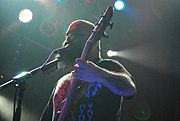
Wayne Static

Wayne Static

Static-X was formed in 1994 after the breakup of Wayne Static and Ken Jay's former band Deep Blue Dream. Wayne and Ken originally met at the Chicago record store where Jay worked and were introduced to one another by Smashing Pumpkins vocalist Billy Corgan (the band also shared a rehearsal space with Smashing Pumpkins for a time). Once Deep Blue Dream folded, Static and Jay moved to Los Angeles to search for new band members. There, they met bassist Tony Campos and guitarist Koichi Fukuda, completing the band's original lineup. Originally they were meant to be called the name of their debut album but figured it was too long and went with Static-X.

Static-X signed with Warner Bros. Records in early 1998, and released their debut album, Wisconsin Death Trip, on March 23, 1999. Soon after, they released their first single "Push It", followed by "I'm with Stupid" and "Bled for Days" in 2000. Static-X toured strictly in support of the album and twice performed on Ozzfest. In the following year a promotional EP, The Death Trip Continues, was released, however this album was not available in stores. In 2001, Wisconsin Death Trip went platinum and is, to date, Static-X's only album to reach this success.

The band has contributed numerous tracks from this album to video game soundtracks and for other promotional applications. The song "Otsegolation" was used in the PlayStation video game, Omega Boost, where it is featured in the main menu and the final boss sequence. The song "Push It" was included in the games Street Skater 2 and Duke Nukem: Land of the Babes, both also for the PlayStation gaming console. An instrumental of "Love Dump" was used as the entrance music for the professional wrestling tag team KroniK in World Championship Wrestling and World Wrestling Entertainment. This version was later used by Steven Richards.

Machine - Shadow Zone (2001–2003)

Tony Campos.

Tony Campos.

During recording of their follow-up album Machine, Koichi Fukuda left the band to spend time with his girlfriend and pursue other musical opportunities. Fukuda was only on one song "Otsego Undead" as keyboardist. As Fukuda's replacement, former Dope member Tripp Eisen stepped in. Machine was released May 22, 2001 to major success, and shortly after, Static-X began work on their third album, Shadow Zone, this time with Eisen performing and writing on the album. However, before they could start recording, Ken Jay left the band due to musical and political differences. To drum on the album, Josh Freese of A Perfect Circle and The Vandals was brought in. Later, Nick Oshiro, formerly of Seether, was selected as Jay's replacement and the band's permanent drummer.

During production of the album, Jonathan Davis of Korn contacted Wayne Static to record the vocals for a song he wrote for the Queen of the Damned soundtrack, entitled "Not Meant for Me" as well as contributing the song "Cold". A music video for the song was included as one of the special features on the dvd release (see: Queen of the Damned). Shadow Zone was later released on October 7, 2003. Static-X continued their affiliation with video game soundtracks: "This Is Not" from Machine, was included in the video game Shaun Palmer's Pro Snowboarder; "The Only" from Shadow Zone was featured on the soundtrack of Need for Speed: Underground, while "Start a War" was included in the video game WWE SmackDown! vs. RAW 2006.

Beneath, Between, Beyond - Start A War (2004–2006)

Nick Oshiro.

Nick Oshiro.

July 20, 2004 saw the release of Beneath... Between... Beyond..., a collection of rarities and demos. Shortly after the release of Beneath... Between... Beyond..., the band commenced work on their fourth studio album, Start a War. On February, 2005, Tripp Eisen was arrested in a sex scandal involving minors, and was not able to perform his obligations with the band, therefore he had to leave the band.[3] Former guitarist Koichi Fukuda, who had been providing samples and keyboards for the new album, rejoined Static-X to fill the gap left by Eisen. Start a War was finally released on June 14, 2005. "I'm the One" and "Dirthouse" were released as singles from the album. The song "Skinnyman" is included in the soundtrack of the 2005 street racing game Need For Speed: Most Wanted, while the song "Start A War" was featured in WWE SmackDown! vs. Raw 2006.

Cannibal (2007–2008)

Koichi Fukuda.

Koichi Fukuda.

Cannibal, released on April 3, 2007, marked the studio return of their original guitarist, Koichi Fukuda. One of the new tracks called "No Submission" is available on the Saw III soundtrack. The full track has also been released on Static-X's MySpace page. "Cannibal" was released as a digital download single at iTunes. "Destroyer" was released as a lead off radio single, before the album was released. Videos for the singles were supposed to be taken at the same time.

On March 20, the upcoming album was preceded with an exclusive Destroyer EP. The video for "Destroyer" has also been produced and is available now at headbangersball.com. The album itself debuted at in the U.S. with sales of over 30,000.

On May 10, 2007 it was announced that the band will be playing on the main stage at Ozzfest 2007. Additionally, in a recent interview, Wayne Static announced his side-project called "Pighammer".

The chorus of the song "Destroyer" was used in an advertisement promoting the latest video game in the WWE franchise, Smackdown vs. Raw 2008.

In November 2007, Tony Campos joined legendary industrial act Ministry as a temporary touring bassist for Ministry's C U LaTour in the wake of Paul Raven's passing.

Recent Events (2008–present)

The band will begin their sixth studio album in December after returning from the Operation Annihilation tour in Australia. In a recent posting at the Static-X message boards Wayne Static said that the new album is on track to be finished and out by the end of 2008 and that this time around he is focusing on longer buildups and break downs like in the Wisconsin Death Trip days of the band, however the album will still maintain the heaviness that was present on Cannibal. In another recent posting Wayne named four upcoming songs to the new album which are called "Lunatic", "Z28", "Terminal", and "Tera-fied." Wayne also stated that the band has plans to put out a live concert DVD which may or may not include the bands music videos as well. Wayne has commented on the Static-X message boards that there is no working album title yet, or any cover art. He also mentioned that the band begins recording in July.

Style, related artists and influences

Static-X cite Ministry, Prong, Pantera and Type O Negative as major musical influences.[citation needed] They are frequently linked to these bands by fans and critics, along with others such as White Zombie, Nine Inch Nails, Fear Factory, Danzig, and Coal Chamber. Though they have described their music as "evil disco", "death disco" and "rhythmic trancecore", Static-X's sound shares much in common with their industrial metal influences, using heavy distortion, electronic keyboards, pounding bass riffs, and fast-paced, aggressive vocals. Songs generally apply heavy use of synthesizers and insertion of samples, such as snippets of movie dialogue. For example, A Dios Alma Perdida samples spaceship drone sound effects and alien chatter from the film Laserblast. A new element used on their Cannibal album is the presence of guitar solos, that weren't present in the previous albums, except for briefly on the album 'Start a War' in the song 'Pieces'.

Static-X have been labeled a variety of genres by the press, most notably industrial metal, and nu metal; but the genres are disputed. According to vocalist Wayne Static, the band is disliked by some dedicated heavy metal fans that refer to the band as "that nu metal band with the guy with the funny hair". Although Static-X is labeled nu metal by members of the press, the band says they're "more industrial than anything else".

The Otsego songs

Song titles using variations of the word "Otsego" exist on their first four albums, with Cannibal being the first album to break this trend. The songs are titled: "Otsegolation", "Otsego Undead", "Otsegolectric" and "Otsego Amigo". The track "Otsego Undead" is misspelled on the Dracula 2000 soundtrack, and was printed as "Ostego Undead". An explanation for the "Otsego" tracks was given in a 2003 interview with Metal Edge Magazine, where Wayne Static said:

“ Otsego is a town near where I went to college at Michigan (Western Michigan University in Kalamazoo), and it was kind of a depressing, small town. There was a guy named Dean there, and I had his fake ID. ”

Members

Current members

  • Wayne Static - vocals, guitars, programming, keyboards (1994–present)
  • Tony Campos - bass guitar, backing vocals (1994–present)
  • Koichi Fukuda - lead guitar, programming (1994–2001, 2005–present)
  • Nick Oshiro - drums (2003–present)

Former members

  • Ken Jay - drums (1994–2002) (left due to "musical/political differences")
  • Tripp Eisen - lead guitar (2001–2005) (fired due to two sex scandals involving underage girls)

Session members

  • Marty O'Brien - bass guitar (2001) (live fill in)
  • Josh Freese - drums (2003) (during Shadow Zone sessions)
  • Will Hunt - drums (2007) (live fill in)
  • Bevan Davies - drums (2007) (live fill in)

Discography

Main article: Static-X discography

Studio albums

  • 1999: Wisconsin Death Trip
  • 2001: Machine
  • 2003: Shadow Zone
  • 2005: Start a War
  • 2007: Cannibal
  • 2008/2009: Unannounced

Cameos/appearances

  • Wayne can be seen performing in the The X-Ecutioners video It's Goin Down.
  • Static-X appeared and performed "The Only" off of Shadow Zone on an episode of Monster Garage.
  • Static-X performed their single "The Only" on an episode of Carson Daly.
  • Static-X performed their song "Cold" on an episode of Carson Daly.
  • Wayne can be seen in the beginning of the music video for "Rebirth of the Temple" by Silent Civilian.
  • Static-X appeared in the rock remix of rapper Dead Prez's song "Hip Hop."

Metallica


http://www.metallicaband.net/pictures/metallica1.jpg

Metallica
is an American heavy metal band that formed in 1981 in Los Angeles, California. Founded when drummer Lars Ulrich posted an advertisement in a Los Angeles newspaper, Metallica's original line-up consisted of Ulrich, rhythm guitarist and vocalist James Hetfield, lead guitarist Dave Mustaine, and bassist Ron McGovney. These last two were later ejected from the band, in favor of Kirk Hammett and Cliff Burton, respectively. The ejection of Mustaine resulted in a feud between him and Metallica. In September 1986, Metallica's tour bus skidded out of control and flipped, which resulted in Burton being crushed under the bus and killed. Jason Newsted replaced him less than two months later. Newsted left the band in 2001 and was replaced by Robert Trujillo in 2003.

Metallica's early releases included fast tempos, instrumentals, and aggressive musicianship that placed them as one of the "Big Four" of the thrash metal subgenre alongside Slayer, Megadeth and Anthrax. The band earned a growing fan base in the underground music community, and some critics say the 1986 release Master of Puppets is one of the most influential and "heavy" thrash metal albums. The band achieved substantial commercial success with its self-titled 1991 album Metallica, which debuted at number one on the Billboard 200. Some critics and fans believed the band changed its musical direction to appeal to the mainstream audience. With the release of Load in 1996, Metallica distanced itself from earlier releases in what has been described as "an almost alternative [rock] approach", and the band faced accusations of "selling out".

In 2000, Metallica was among several artists who filed a lawsuit against Napster for sharing the band's copyright-protected material for free without the band members' consent. A settlement was reached, and Napster became a pay-to-use service. Despite reaching number one on the Billboard 200, the release of St. Anger in 2003 disappointed some critics and fans with the exclusion of guitar solos, and the "steel-sounding" snare drum. A film titled Some Kind of Monster documented the recording process of St. Anger.

Metallica has released eight studio albums, two live albums, two EPs, twenty-one music videos, thirty-nine singles and has finished recording their upcoming ninth studio album, Death Magnetic. The band has become one of the most commercially successful and influential heavy metal acts. With 100 million records sold worldwide, including 57 million in the United States, the band has won seven Grammy Awards, and has had four albums peak at number one on the Billboard 200. The band's 1991 album Metallica, has sold over 15 million copies, which makes it the 25th highest selling album in the United States.

History

Early days (1981–1983)

Metallica was formed in Los Angeles, California, in early 1981 when drummer Lars Ulrich placed an advertisement in a Los Angeles newspaper—The Recycler—which read "Drummer looking for other metal musicians to jam with Tygers of Pan Tang, Diamond Head and Iron Maiden."[3] Guitarists James Hetfield and Hugh Tanner of Leather Charm answered the advertisement. Although he had not formed a band, Ulrich asked Metal Blade Records founder Brian Slagel if he could record a song for the label's upcoming compilation Metal Massacre. Slagel accepted, and Ulrich recruited Hetfield to sing and play rhythm guitar.

Ulrich talked to his friend Ron Quintana, who was brainstorming names for a fanzine. Quintana had proposed the names Metal Mania and Metallica. Convincing him to use Metal Mania, Ulrich used Metallica for the name of his band. A second advertisement was placed in The Recycler for a position as lead guitarist. Dave Mustaine answered, and, after seeing his expensive guitar equipment, Ulrich and Hetfield recruited him. In early 1982, Metallica recorded its first original song "Hit the Lights" for the Metal Massacre I compilation. Hetfield played bass on the song and Lloyd Grant was credited with a guitar solo.[3] Released on June 14, 1982, early pressings of Metal Massacre I listed the band incorrectly as "Mettallica". Although angered by the error, Metallica managed to create enough "buzz" with the song and the band played its first live show on March 14, 1982, at Radio City in Anaheim, California with newly recruited bassist Ron McGovney. Metallica recorded its first demo titled Power Metal, a name inspired by Quintana's early business cards in early 1982. In the Fall of 1982, Ulrich and Hetfield attended a show at the nightclub Whisky a Go Go, which featured bassist Cliff Burton in a band called Trauma. The two were "blown away" by Burton's use of a wah-wah pedal and asked him to join Metallica. Hetfield and Mustaine wanted McGovney out as they thought that he "didn't contribute anything, he just followed."[5] Although Burton initially declined the offer, by the end of the year he accepted on the condition the band move to San Francisco. Metallica's first live performance with Burton was at the nightclub The Stone in March 1983, and the first recording to feature Burton was the 1983 Megaforce demo.

Metallica was ready to record its debut album, but when Metal Blade was unable to cover the additional cost, the band began looking for other options. Concert promoter Johnny "Z" Zazula, who had heard the 1982 No Life 'til Leather demo, offered to broker a record deal with Metallica and New York City-based record labels. After receiving no interest from various record labels, Zazula borrowed the money to cover the record's recording budget and signed Metallica to his own label, Megaforce Records. Band members decided to kick Mustaine out of the band due to drug and alcohol abuse, and violent behavior. Exodus guitarist Kirk Hammett flew in to replace Mustaine the same afternoon. Metallica's first show with Hammett was on April 16, 1983, at the nightclub The Showplace in Dover, New Jersey.

Mustaine has expressed his dislike for Hammett in interviews. He said Hammett "stole my job, but at least I got to bang his girlfriend before he took my job — how do I taste, Kirk?" Mustaine was "pissed off" because he believes Hammett became popular by playing the guitar leads that Mustaine wrote. In a 1985 interview with Metal Forces, Mustaine slammed Hammett saying, "it's real funny how Kirk Hammett ripped off every lead break I'd played on that No Life 'til Leather tape and got voted No. 1 guitarist in your magazine." On Megadeth's 1985 debut album Killing Is My Business... And Business Is Good!, Mustaine included the song "Mechanix", which Metallica renamed as "The Four Horsemen" on Kill 'Em All. Mustaine said he did this to "straighten Metallica up", as Metallica referred to Mustaine as a drunk and said he could not play guitar.

Kill 'Em All and Ride the Lightning (1983–1984)

In 1983, Metallica traveled to Rochester, New York to record its first album, Metal Up Your Ass, with production duties handled by Paul Curcio. Due to conflicts with the band's record label and the distributors' refusal to release an album with that name, it was renamed Kill 'Em All. Released on Megaforce Records in the U.S. and Music for Nations in Europe, the album peaked on the Billboard 200 at number 120, and although the album was not initially a financial success, it earned Metallica a growing fan base in the underground metal scene. The band embarked on the Kill 'Em All For One tour with Raven to support the release. In February 1984, Metallica supported Venom on the Seven Dates of Hell tour, where they performed in front of 7,000 people at the Aardschok Festival in Zwolle, Netherlands.

Metallica recorded its second studio album, Ride the Lightning, at Sweet Silence Studios in Copenhagen, Denmark. Released in August 1984, the album peaked at number 100 on the Billboard 200. A French printing press mistakenly printed green covers for the album, which are now considered collectors' items. Other songs on the album include "For Whom the Bell Tolls", "Creeping Death" (which tells the biblical story of the Hebrews' exodus from slavery in Egypt, focusing on the various plagues that were visited on the Egyptians), and the instrumental "The Call of Ktulu". Mustaine received a writing credit for "Ride the Lightning" and "The Call of Ktulu".

Master of Puppets (1984–1986)

Damage Inc. Tour 1986

Damage Inc. Tour 1986

Elektra Records A&R director Michael Alago, and co-founder of Q-Prime Management Cliff Burnstein, attended a September 1984 Metallica concert. Impressed with what they saw, they signed Metallica to Elektra Records and made the band a client of Q-Prime Management.[14] Metallica's burgeoning success was such that the band's British label Music for Nations issued a limited edition Creeping Death EP, which sold 40,000 copies as an import in the U.S. Two of the three songs on the record (cover versions of Diamond Head's "Am I Evil?", and Blitzkrieg's "Blitzkrieg") appeared on the 1989 Elektra reissue of Kill 'Em All.[15] Metallica embarked on its first major European tour with Tank to an average crowd of 1,300. Returning to the U.S. marked a tour co-headlining with W.A.S.P. and Armored Saint supporting. Metallica played its largest show at the Monsters of Rock festival on August 17, 1985, with Bon Jovi and Ratt at Donington Park in England, playing in front of 70,000 people. A show in Oakland, California, at the Day on the Green festival saw the band play in front of a crowd of 60,000.[14]

Metallica's third studio album, Master of Puppets was recorded at Sweet Silence Studios and was released in March 1986. The album peaked at number 29 on the Billboard 200, and spent 72 weeks on the chart. The album was the band's first to be certified gold on November 4, 1986, and was certified six times platinum in 2003. Some critics, including Steve Huey of Allmusic, consider the album to be the "greatest heavy metal album of all time", and earned Metallica the title of the "pioneers of thrash metal". Following the release of the album, Metallica supported Ozzy Osbourne for a U.S. tour. Hetfield broke his wrist skateboarding down a hill and continued the tour performing vocals, with guitar technician John Marshall playing rhythm guitar.

Death of Cliff Burton (1986–1987)

A memorial for Burton in Ljungby, Sweden

A memorial for Burton in Ljungby, Sweden

On September 27, 1986, during the European leg of Metallica's Damage Inc. tour, members drew cards to see which bunk of the tour bus they would sleep in. Burton won and chose to sleep in Hammett's bunk. Around dawn near Dörarp, Sweden, the bus driver lost control and skidded, which caused the bus to flip several times. Ulrich, Hammett, and Hetfield sustained no serious injuries; however, bassist Burton was pinned under the bus and was killed. Hetfield recalls, "I saw the bus lying right on him. I saw his legs sticking out. I freaked. The bus driver, I recall, was trying to yank the blanket out from under him to use for other people. I just went, 'Don't fucking do that!' I already wanted to kill the guy." Burton's death left Metallica's future in doubt. The three remaining members decided that Burton would want them to carry on, and with the Burton family's blessings, the band sought a replacement.

Roughly 40 people tried out for auditions including Hammett's childhood friend Les Claypool of Primus, Troy Gregory of Prong, and Jason Newsted, formerly of Flotsam and Jetsam. Newsted learned Metallica's entire setlist, and after the audition Metallica invited him to Tommy's Joint in San Francisco. Hetfield, Ulrich, and Hammett decided that Newsted was the one to replace Burton, and Newsted's first live performance with Metallica was at the Country Club in Reseda, California. The members took it on themselves to "initiate" Newsted by tricking him into eating a ball of wasabi.

In March 1987, Hetfield broke his wrist a second time skateboarding. Guitar technician Marshall returned playing rhythm guitar, but the injury forced the band to cancel a Saturday Night Live appearance. Metallica finished its tour in the early months of 1987, and in August 1987 an all-covers EP titled The $5.98 E.P.: Garage Days Re-Revisited was released. The EP was recorded in an effort to utilize the band's newly constructed recording studio, test out the talents of Newsted, and to relieve grief and stress following the death of Burton. A video titled Cliff 'Em All was released in 1987 commemorating Burton's three years in Metallica. Footage included bass solos, home videos, and pictures.

...And Justice for All (1988–1990)

...And Justice for All, the group's first studio album since Burton's death, was released in 1988. The album was a commercial success, peaking at number six on the Billboard 200, the band's first album to enter the top 10. The album was certified platinum nine weeks after its release.[21] Newsted's bass was purposely turned down on the album as a part of the continuous "hazing" he received, and his musical ideas were ignored. There were complaints with the production; namely, Steve Huey of Allmusic noted Ulrich's drums were clicking more than thudding, and the guitars "buzz thinly". The Damaged Justice tour followed to promote the album.

In 1989, Metallica received its first Grammy Award nomination for ...And Justice for All, in the new Best Hard Rock/Metal Performance Vocal or Instrument category. Metallica was the favorite to win; however, the award was given to Jethro Tull for the album Crest of a Knave. The result generated controversy among fans and the press, as Metallica was standing off-stage waiting to receive the award after performing the song "One". Jethro Tull had been advised by its manager not to attend the ceremony as he was expecting Metallica to win. The award was named in Entertainment Weekly's "Grammy's 10 Biggest Upsets". Three years later, Ulrich referred to the award when accepting a Grammy for "Enter Sandman" stating "We gotta thank Jethro Tull for not putting out an album this year."

Following the release of ...And Justice for All, Metallica released its debut music video for the song "One". The band performed the song in an abandoned warehouse, and footage was remixed with the film, Johnny Got His Gun. Rather than organize an ongoing licensing deal, Metallica purchased the rights to the film. The remixed video was submitted to MTV, with the alternate performance-only version held back in the event that MTV banned the remix version. MTV accepted the remix version, and the video was viewers' first exposure to Metallica. It was voted number 38 in 1999 when MTV aired its "Top 100 Videos of All Time" countdown, and was featured in the network's 25th Anniversary edition of ADD Video, which showcased the most popular videos on MTV in the last 25 years.

Metallica (1990–1993)

In October 1990, Metallica entered One on One studio in North Hollywood to record its next album. Bob Rock, who had worked with the bands The Cult, Bon Jovi, and Mötley Crüe, was hired as producer. Metallica (also known as "The Black Album") was remixed three times, cost $1 million, and ended three marriages. Although the release was stalled until 1991, Metallica peaked at number one on the Billboard 200 with shipments exceeding 650,000 units in its first week. The album was responsible for bringing Metallica to the attention of the mainstream and has been certified 15 times platinum in the U.S., which makes it the 25th highest-selling album in the country. The making of Metallica and the following tour was documented in A Year and a Half in the Life of Metallica. Dubbed the Wherever We May Roam Tour, it lasted 14 months and included dates in the U.S., Japan, and England.

On August 8, 1992, during the financially successful co-headlining GNR-Metallica Stadium Tour with Guns N' Roses, Hetfield suffered severe second and third degree burns to his arms, face, hands, and legs. There was confusion with the new pyrotechnics setup, which resulted with Hetfield walking into a 12-foot (3.7 m) flame during "Fade to Black". Newsted recalls Hetfield's skin was "bubbling like on The Toxic Avenger". Guitar technician John Marshall replaced Hetfield for the remainder of the tour as Hetfield was unable to play guitar, although was able to sing. The band's first box set was released in November 1993 called Live Shit: Binge & Purge. The collection contained three live CDs, three home videos, and a book filled with riders and letters.

Load, ReLoad, and Garage Inc. (1994–1999)

The cover of Load was created using a mixture of semen and bovine blood mixed between sheets of plexiglass. It marked a change in image and music for the band.

The cover of Load was created using a mixture of semen and bovine blood mixed between sheets of plexiglass. It marked a change in image and music for the band.

After almost three years of touring to support Metallica, including a headlining performance at Woodstock '94, Metallica returned to the studio to write and record its sixth studio album. The band took a break in the summer of 1995 and played three outdoor shows which included headlining Donington Park in the U.K., supported by Slayer, Skid Row, Slash's Snakepit, Therapy?, and Corrosion of Conformity. The short tour was titled Escape From The Studio '95. The band spent roughly one year writing and recording new songs, resulting in the release of Load in 1996, which entered the Billboard 200 and ARIA Charts at number one, marking the band's second number one. The cover of Load was created by Andres Serrano, and was called Blood and Semen III. Serrano pressed a mixture of his own semen and bovine blood between sheets of plexiglass, but not all fans were happy with the cover. The release marked a change in musical direction for the band as some critics and fans accused Metallica of "going alternative", and "selling out". The band members received haircuts, and headlined the alternative rock festival Lollapalooza, which lead to further accusations.

During early production of the album, the band had produced enough material for a double album. It was decided that half of the songs were to be released, and the band would continue to work on the remaining songs and release them the following year. This resulted in the follow-up album, ReLoad. The cover was created by Serrano, this time using a mixture of blood and urine. ReLoad peaked at number one on the Billboard 200, and number two on the Top Canadian Album chart. Hetfield noted in the 2004 documentary film Some Kind of Monster that the songs on these albums were initially thought by the band to be of average quality, and were "polished and reworked" until judged to be releasable. To promote ReLoad, Metallica performed on NBC's Saturday Night Live in December 1997, performing "Fuel" and "The Memory Remains" with Marianne Faithfull.

In 1998, Metallica compiled a double album of cover songs titled Garage Inc.. The first disc contained newly recorded covers by bands such as Diamond Head, Killing Joke, The Misfits, Thin Lizzy, Mercyful Fate, and Black Sabbath. The second disc featured the original The $5.98 E.P.: Garage Days Re-Revisited, which had become a scarce collectors' item. The album entered the Billboard 200 at number two.

On April 21 and April 22, 1999, Metallica recorded two performances with the San Francisco Symphony Orchestra conducted by Michael Kamen. Kamen, who had previously worked with producer Rock on "Nothing Else Matters", approached the band in 1991 with the idea of pairing Metallica's music with a symphony orchestra. Kamen and his staff of over 100 composed additional orchestral material for Metallica songs. Metallica wrote two new Kamen-scored songs for the event, "No Leaf Clover" and "- Human". The audio recording and concert footage were released in 1999 as the album and concert film S&M. It entered the Billboard 200 at number two, and the Australian ARIA charts and Top Internet Albums chart at number one.

Napster controversy (2000–2001)

In 2000, Metallica discovered that a demo of its song "I Disappear", which was supposed to be released in combination with the Mission: Impossible II soundtrack, was receiving radio airplay. Tracing the source of the leak, the band found the file on the Napster peer-to-peer file-sharing network, and also found that the band's entire catalogue was freely available. Legal action was initiated against Napster with Metallica filing a lawsuit at the U.S. District Court, Central District of California, alleging that Napster violated three areas of the law: copyright infringement, unlawful use of digital audio interface device, and the Racketeer Influenced and Corrupt Organizations Act.

Ulrich led the case against Napster

Ulrich led the case against Napster

Though the lawsuit named three universities for copyright infringement, the University of Southern California, Yale University, and Indiana University, no individuals were named. Yale and Indiana complied and blocked the service from its campuses, and Metallica withdrew the universities' inclusion in the lawsuit. Southern California, however, had a meeting with students to figure out what was going to happen with Napster. School administrators wanted it banned as it used 40% of the bandwidth, which was not for educational purposes.

Metallica hired online consulting firm NetPD to monitor the Napster service for a weekend. A list of 335,435 Napster users who were believed to be sharing Metallica's music was compiled, and the 60,000 page document was delivered to Napster's office as Metallica requested the users be banned from the service. The users were banned, and rap artist Dr. Dre joined the lawsuit against Napster, which resulted in an additional 230,142 Napster users banned.

Ulrich provided a statement to the Senate Judiciary Committee regarding copyright infringement on July 11, 2000. Federal Judge Marilyn Hall Patel ordered the site place a filter on the program in 72 hours or be shutdown. A settlement was reached between Metallica and Napster when German media conglomerate Bertelsmann AG BMG showed interest to purchase the rights to Napster for $94 million. Under the terms of settlement, Napster agreed to block users who shared music by artists who do not want their music shared.[ However, on June 3, 2002 Napster filed for Chapter 11 protection under U.S. bankruptcy laws. On September 3, 2002, an American bankruptcy judge blocked the sale to Bertelsmann and forced Napster to liquidate its assets according to Chapter 7 of the U.S. bankruptcy laws.

At the 2000 MTV Video Music Awards, Ulrich appeared in a skit with host Marlon Wayans that blasted the idea of using Napster to share music. Marlon played a college student sitting in his dorm room listening to Metallica's "I Disappear". Ulrich walked in and asked for an explanation. On receiving Wayans' excuse that using Napster was just "sharing", Lars retorted that Marlon's idea of sharing was "borrowing things that were not yours without asking." He called in the Metallica road crew, who proceeded to confiscate all of Wayans' belongings, leaving him almost nude in an empty room. Napster creator Shawn Fanning responded later in the ceremony by presenting an award wearing a Metallica shirt, saying, "I borrowed this shirt from a friend. Maybe, if I like it, I'll buy one of my own." In 2007, Metallica was named #17 on Blender magazine's list of "biggest wusses in rock" for its "anti-Napster crusade".[49]

Newsted's departure and St. Anger (2001–2005)

As plans were being made to enter the recording studio, Newsted left the band on January 17, 2001. His statement revealed his departure was based on "private and personal reasons, and the physical damage I have done to myself over the years while playing the music that I love." During a Playboy interview with Metallica, Newsted revealed intentions he wanted to release an album with his side project, Echobrain. Hetfield was against the idea and said, "When someone does a side project, it takes away from the strength of Metallica" and a side project is "like cheating on your wife in a way". Newsted countered his statement by saying Hetfield recorded vocals for a song in the South Park movie, and appears on two Corrosion of Conformity albums. Hetfield replied, "My name isn't on those records. And I'm not out trying to sell them", and pondered questions such as, "Where would it end? Does he start touring with it? Does he sell shirts? Is it his band?"

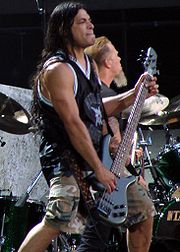
Robert Trujillo was announced as Metallica's new bassist on February 24, 2003

Robert Trujillo was announced as Metallica's new bassist on February 24, 2003

In April 2001, filmmakers Joe Berlinger and Bruce Sinofsky began following Metallica to document the recording process of the next studio album. Over two years, more than 1,000 hours of footage was recorded. On July 19, 2001, before preparations to enter the recording studio, Hetfield entered rehab due to "alcoholism and other addictions". All recording plans were put on hiatus and the band's future was in doubt.[51] However, when Hetfield returned on December 4, 2001, the band returned to the recording studio and Hetfield was required to work four hours a day, noon to 4 PM, and spend the rest of his time with his family. The footage recorded by Berlinger and Sinofsky was compiled into the documentary, Some Kind of Monster, which premiered at the Sundance film festival. In the documentary, Newsted described his former bandmates' decision to hire a therapist to help solve their problems as "really fucking lame and weak".

Metallica held auditions for Newsted's permanent replacement in early 2003, after St Anger's completion, for which Bob Rock recorded bass. Bassists that auditioned included Pepper Keenan, Jeordie White, Scott Reeder, Eric Avery, Danny Lohner, and Chris Wyse. Following three months of auditions, Robert Trujillo, formerly of Suicidal Tendencies and Ozzy Osbourne's band, was chosen as the new bassist. As Metallica moved on, Newsted joined Canadian thrash metal band Voivod in 2002, and was Trujillo's replacement in Osbourne's band during the 2003 Ozzfest tour, which included Voivod as part of the touring bill.

In June 2003, Metallica's eighth studio album, St. Anger, debuted at number one on the Billboard 200, and drew mixed reaction from critics. Ulrich's "steely" sounding snare drum, and the absence of guitar solos received particular criticism. Kevin Forest Moreau of Shakingthrough.net commented that "the guitars stumble in a monotone of mid-level, processed rattle; the drums don't propel as much as struggle to disguise an all-too-turgid pace; and the rage is both unfocused and leavened with too much narcissistic navel-gazing",[ and Brent DiCrescenzo of Pitchfork Media described it as "an utter mess". However, Blender magazine called it the "grimiest and grimmest of the band's Bob Rock productions", and New York Magazine called it "utterly raw and rocking". The title track, "St. Anger", won the Grammy Award for Best Metal Performance in 2004, and was used as the official theme song for WWE's SummerSlam 2003.

Before the band's set at the 2004 Download Festival in England, Ulrich was rushed to hospital with a mysterious illness, and was unable to perform.[57] Hetfield searched for volunteers at the last minute to replace Ulrich. Slayer drummer Dave Lombardo, and Slipknot drummer Joey Jordison volunteered. Lombardo performed the songs "Battery" and "The Four Horsemen", Ulrich's drum technician Flemming Larsen performed "Fade To Black", with Jordison performing the remainder of the set. Having toured for two years in support of St. Anger on the Summer Sanitarium Tour 2003 and the Madly in Anger with the World tour, Metallica took a break from performing and spent most of 2005 with friends and family. However, for two shows on November 13, 2005, and November 15, 2005, Metallica opened for The Rolling Stones at the AT&T Park in San Francisco.

Death Magnetic (2006–present)

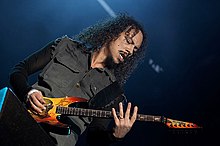
Hammett performing live in 2007

Hammett performing live in 2007

In 2006, Metallica announced on its official website that after 15 years, long-time producer Bob Rock was stepping down and would not be producing Metallica's next studio album. Metallica chose to work with producer Rick Rubin, who has produced albums for bands including Danzig, Slayer, System of a Down, and Slipknot. Metallica debuted an untitled song named "The New Song" on June 6, and another song nicknamed "The Other New Song" on August 12. However, in a June 2007 interview with Greece's Rock Hard Magazine, Trujillo said that the songs "won't make it [on the album], at least not in that form."

In December 2006, Metallica released a DVD containing all the music videos from 1989 to 2004. The DVD, titled The Videos 1989-2004, sold 28,000 copies in its first week, and entered the Billboard Top Videos chart at number three.[63] Metallica recorded a cover of Ennio Morricone's "The Ecstasy of Gold" for a tribute album titled We All Love Ennio Morricone, released in February 2007. The cover received a Grammy nomination at the 50th Grammy Awards for the category "Best Rock Instrumental Performance". A recording of "The Ecstasy of Gold" has been played as the introduction for Metallica performances since the 1980s. However, this new version features the band itself performing the piece, giving a new guitar-based interpretation to the music. On February 9, 2007, Metallica confirmed that pre-production on the ninth studio album had been completed, and recording began on March 12, 2007. Set for release in September 2008, Metallica and Rubin "polished" vocal mixes throughout December 2007.

Metallica embarked on a European tour titled Sick of the Studio '07, which included 11 shows. In July, the band attended Live Earth in London, performing the songs "Sad But True", "Nothing Else Matters", and "Enter Sandman". BBC, who were broadcasting the event from the UK, received 413 complaints after they missed the beginning of "Sad But True", and cut off before "Enter Sandman" to a pre-recorded Crowded House performance from the Sydney, Australia show.[70][71] The band performed at Wembley Stadium the following day, as part of its Sick of the Studio '07, with support from Mastodon, Machine Head and HIM.

In May and June 2008, Metallica played a number of festival-type shows including major headlining slots at the Electric Weekend in Spain, the Pinkpop Festival in the Netherlands, Rock am Ring and Rock im Park Festivals in Germany, and Rock In Rio Festival in Portugal.They played a 15-song set followed by a 3-song encore at the 2008 Bonnaroo Music & Arts Festival in Manchester, Tennessee, U.S.. On July 16, in Norway, they started the second leg of their tour.

In July 2008, Metallica released a cover of the Iron Maiden song "Remember Tomorrow" on the tribute album Maiden Heaven: A Tribute to Iron Maiden.

Style and lyrical themes

Influenced by Black Sabbath, Deep Purple, and Led Zeppelin, early Metallica releases contained fast tempos, harmonized leads, and nine-minute instrumentals. Steve Huey of Allmusic said that Ride the Lightning featured "extended, progressive epics; tight, concise groove-rockers". Huey felt Metallica expanded its compositional technique and range of expression to take on a more aggressive approach in following releases, and lyrics dealt with more personal and socially conscious issues. Lyrical themes explored on Master of Puppets included religious and military leaders, rage, insanity, monsters, and drugs.

In 1991, with new producer Bob Rock, Huey felt Metallica simplified and streamlined its music for a more commercial approach to appeal to the mainstream audience. The band abandoned its aggressive, fast tempos to expand its music and expressive range, said Robert Palmer of Rolling Stone. The change in direction proved commercially successful as Metallica was the band's first album to peak at number one on the Billboard 200. Metallica noticed changes to the rock scene created by grunge band Nirvana in the 1990s. In what has been described as "an almost alternative [rock]" approach, the band focused on non-metal influences and changed musical direction. Moving away from lyrical themes dealing with drugs and monsters, Metallica's new lyrical approach focused on anger, loss, and retribution. Some fans and critics were not pleased with this change, which included haircuts, the cover of Load, and headlining the alternative rock concert Lollapalooza. David Fricke of Rolling Stone described the move as "goodbye to the moldy stricture and dead-end Puritanism of no-frills thrash" and called Load the heaviest record of 1996. With the release of ReLoad in 1997, the band focused on blues, rock, and country influences as exemplified in the song "The Unforgiven II", incorporating more rhythm and harmony in song structures.

St. Anger marked the biggest musical change of the band's career. Bored with guitar solos, Ulrich chose to omit them from the album, leaving a "raw and unpolished sound". The band used drop C tuning, and Ulrich's snare drum received particular criticism. New York Magazine's Ethan Brown noted it "reverberates with a thwong", Lyrics on the album dealt with Hetfield's stint in rehab, including references to the devil, anti-drug themes, claustrophobia, impending doom, and religion's hypocrisy. The band's ninth studio album, Death Magnetic, will return to E tuning at the advice of producer Rick Rubin, contain guitar solos, and have Middle Eastern influences.

Legacy and influence

Metallica has become one of the most influential heavy metal bands, and is credited as one of the "big four" of thrash metal, along with Slayer, Anthrax, and Megadeth. The band has sold more than 90 million records worldwide, including 57 million in the United States, which makes Metallica the most commercially successful thrash metal band. The writers of The Rolling Stone Encyclopedia of Rock & Roll felt Metallica gave heavy metal "a much-needed charge". Stephen Thomas Erlewine and Greg Prato of Allmusic said Metallica, "expanded the limits of thrash, using speed and volume not for their own sake, but to enhance their intricately structured compositions", calling the band "easily the best, most influential heavy metal band of the '80s, responsible for bringing the music back to Earth."

Jonathan Davis of Korn respects Metallica as his favorite band and comments, "I love that they've done things their own way and they've persevered over the years and they're still relevant to this day. I think they're one of the greatest bands ever." Godsmack drummer Shannon Larkin said Metallica has been the biggest influence on the band stating, "they really changed my life when I was 16 years old - I’d never heard anything that heavy."[86] Vocalist and guitarist Robb Flynn of Machine Head said that when creating the band's 2007 album, The Blackening, "What we mean is an album that has the power, influence and epic grandeur of that album [Master of Puppets] – and the staying power - a timeless record like that". Trivium guitarists Corey Beaulieu and Matt Heafy said that when they heard Metallica they wanted to start playing guitar. M Shadows of Avenged Sevenfold stated touring with Metallica was the band's career highlight, and said "Selling tons of records and playing huge shows will never compare to meeting your idols [Metallica]." God Forbid guitarists Doc and Dallas Coyle grew up with Metallica as an inspiration, and the band's bassist John Outcalt admires Burton as a "rocker".[91] Ill Niño drummer Dave Chavarri finds early Metallica releases as "heavy, raw, rebellious. It said, 'fuck you'", and Adema drummer Kris Kohls says the band is influenced by Metallica.

Metallica guest starring in The Simpsons episode "The Mook, the Chef, the Wife and Her Homer"

Metallica guest starring in The Simpsons episode "The Mook, the Chef, the Wife and Her Homer"

Kerrang! released a tribute album with the April 8, 2006, edition of the magazine, titled Master of Puppets: Remastered, which celebrated the 20-year anniversary of Master of Puppets. The album featured cover versions of Metallica songs by the bands Machine Head, Bullet for My Valentine, Chimaira, Mastodon, Mendeed, and Trivium, all who are influenced by Metallica. Over 15 Metallica tribute albums have been released. On September 10, 2006, Metallica guest starred on The Simpsons' eighteenth season premier "The Mook, the Chef, the Wife and Her Homer",[94] and Hammett's and Hetfield's voices were used in three episodes of the animated television series Metalocalypse.

Finnish cello metal band Apocalyptica released a tribute album, Plays Metallica by Four Cellos, which featured eight Metallica songs recorded with cellos. A parody band named Beatallica plays music using a combination of The Beatles and Metallica songs. Beatallica faced legal troubles when the Sony Corporation, who own The Beatles' catalogue, ordered a cease-and-desist claiming "substantial and irreparable injury"—ordering the group to pay damages. A fan of Beatallica, Ulrich asked Metallica lawyer Peter Paterno to help settle the legal case.

Metallica was ranked by MTV as the third "Greatest Heavy Metal Band in History", was listed fifth on VH1's 100 Greatest Artists of Hard Rock, and was number one on VH1's 20 Greatest Metal Bands list.[98] Master of Puppets was ranked number 167 on Rolling Stone's "500 Great Albums of all time", and Metallica was number 252. Master of Puppets was named in Q Magazine's "50 Heaviest Albums Of All Time", ranked number one on IGN's "Top 25 Metal Albums",[101] and number one on the Metal-rules.com "Top 100 Heavy Metal Albums" list.[102] The song "Enter Sandman" was ranked number 399 on Rolling Stone's "500 Greatest Songs of All Time".

On April 7, 1999, Metallica was inducted into the San Francisco Walk of Fame. The mayor of San Francisco, Willie Brown, proclaimed the day "Official Metallica Day". Metallica was awarded the mtvICON award in 2003, and a concert was held paying tribute to the band with artists performing Metallica songs. Performances included Sum 41 with a medley of "For Whom the Bell Tolls", "Enter Sandman", and "Master of Puppets". Staind covered "Nothing Else Matters", Avril Lavigne played "Fuel", hip-hop artist Snoop Dogg performed "Sad But True", Korn played "One", and Limp Bizkit performed a rendition of "Welcome Home (Sanitarium)".

Awards

Main article: List of Metallica awards

Metallica has won seven Grammy Awards:

  • 1990: Best Metal Performance – "One"
  • 1991: Best Metal Performance – "Stone Cold Crazy"
  • 1992: Best Metal Performance With Vocal – Metallica
  • 1999: Best Metal Performance – "Better than You"
  • 2000: Best Hard Rock Performance – "Whiskey in the Jar"
  • 2001: Best Rock Instrumental Performance - "The Call of Ktulu" with Michael Kamen and the San Francisco Symphony
  • 2004: Best Metal Performance – "St. Anger"

MTV Video Music Awards:

  • 1992: Best Metal Video – "Enter Sandman"
  • 1996: Best Metal Video – "Until it Sleeps"

American Music Awards:

  • 1996: Favorite Artist: Heavy Metal/Hard Rock: Metallica – Load
  • 1996: Favorite Metal/Hard Rock Song – "Until it Sleeps"

Billboard Music Awards:

  • 1997: Billboard Rock and Roll Artist of the Year – Metallica (RIAA Diamond Award)
  • 1999: Catalogue Artist of the Year – Metallica
  • 1999: Catalogue Album of the Year – Metallica

Kerrang! awards:

  • 2003: Hall of Fame – Metallica

Band members

Main article: Metallica band members
  • James Hetfield – lead vocals & rhythm guitar (1981–present)
  • Kirk Hammett – lead guitar, backing vocals (1983–present)
  • Robert Trujillo – bass, backing vocals (2003–present)
  • Lars Ulrich – drums, percussion (1981–present)

Former members

  • Lloyd Grant - lead guitar (1981)
  • Ron McGovney – bass (1981-1982)
  • Dave Mustaine – lead guitar, backing vocals (1981–1983)
  • Cliff Burton – bass, backing vocals (1982–1986)
  • Jason Newsted – bass, backing vocals (1986–2001)

Discography

Main article: Metallica discography
  • 1983: Kill 'Em All
  • 1984: Ride the Lightning
  • 1986: Master of Puppets
  • 1988: ...And Justice for All
  • 1991: Metallica
  • 1996: Load
  • 1997: ReLoad
  • 2003: St. Anger
  • 2008: Death Magnetic

Nirvana


http://techdigest.tv/kurtcobain.jpg

Nirvana
was an American rock band that was formed by singer/guitarist Kurt Cobain and bassist Krist Novoselic in Aberdeen, Washington. Nirvana went through a succession of drummers, the longest-lasting being Dave Grohl, who joined the band in 1990.

With the lead single "Smells Like Teen Spirit" from the group's second album Nevermind (1991), Nirvana entered into the mainstream, bringing along with it a subgenre of alternative rock called grunge. Other Seattle grunge bands such as Alice in Chains, Pearl Jam, and Soundgarden also gained popularity, and, as a result, alternative rock became a dominant genre on radio and music television in the United States during the early-to-middle 1990s. As Nirvana's frontman, Kurt Cobain found himself referred to in the media as the "spokesman of a generation", with Nirvana the "flagship band" of "Generation X". Cobain was uncomfortable with the attention and placed his focus on the band's music, challenging the band's audience with its third studio album In Utero (1993).

Nirvana's brief run ended with Cobain's death in April 1994, but the band's popularity continued in the years that followed. In 2002, "You Know You're Right", an unfinished demo from the band's final recording session, topped radio playlists around the world. Since their debut, the band has sold over fifty million albums worldwide. Nirvana are often credited with being one of the most popular and important rock bands of recent years.

History

Early years

Nirvana in 1989. Front to back: Cobain, Everman, Channing, Novoselic.

Nirvana in 1989. Front to back: Cobain, Everman, Channing, Novoselic.

Cobain and Novoselic met in 1985. Both were fans of the Melvins, and frequented the band's practice space. After a couple of false starts at forming their own band, the duo recruited drummer Aaron Burckhard, creating the first incarnation of what would eventually become Nirvana. Cobain later described the sound of the band when they first started as "a Gang of Four and Scratch Acid ripoff." Within a few months, Burckhard was fired from the band. He was temporarily replaced by Dale Crover of the Melvins, who played on the band's first demos. Dave Foster then began a brief tenure as the band's drummer.

During its initial months, the band went through a series of names, including Skid Row, Pen Cap Chew, and Ted Ed Fred. The band finally settled on Nirvana in early 1988, which Cobain said was chosen because "I wanted a name that was kind of beautiful or nice and pretty instead of a mean, raunchy punk rock name like the Angry Samoans."[5] Nirvana played their first show under the name that March. A couple of months later, the band finally settled on a drummer, Chad Channing.

Nirvana's first release was the single "Love Buzz/Big Cheese" in 1988 on Seattle independent record label Sub Pop. The following year, the band released its first album, Bleach. To record Bleach, the band turned to noted local producer Jack Endino, who had recorded the band's first studio demos. Bleach was highly influenced by the Melvins, by the heavy dirge-rock of Mudhoney, 1980s punk rock, the Pixies, and by the 1970s rock of Black Sabbath and Led Zeppelin. Novoselic noted in a 2001 interview with Rolling Stone that the band had played a tape in their van while on tour that had an album by The Smithereens on one side and an album by the black metal band Celtic Frost on the other, and noted that the combination probably played an influence as well.[6] Bleach became a favorite of college radio stations nationally, but gave few hints of where the band would find itself two years later.

The money for the recording sessions for Bleach, listed as $606.17 on the album sleeve, was supplied by Jason Everman. Everman was introduced to Cobain by Dylan Carlson, but had known Channing since the fifth grade. Everman began hanging out with the band, and offered to lend the money to them for the recording. Though Everman did not actually play on the album, he was credited for playing guitar on Bleach because, according to Novoselic, they "wanted to make him feel more at home in the band."[8] After the album was completed, Everman had a brief and contentious stay with the band as a second guitar player, but was fired following their first US tour.

In a late 1989 interview, Cobain noted that the band's music was changing. He said, "The early songs were really angry ... But as time goes on the songs are getting poppier and poppier as I get happier and happier. The songs are now about conflicts in relationships, emotional things with other human beings." In April 1990, the band began working with producer Butch Vig at Smart Studios in Madison, Wisconsin on recordings for the follow-up to Bleach. During the sessions, Kurt and Krist became disenchanted with Channing's drumming, and Channing expressed frustration at not being actively involved in songwriting. Not long after the sessions were complete, Channing was gone from the band. After a few weeks with Dale Crover of the Melvins filling in, Nirvana hired Mudhoney drummer Dan Peters, with whom they recorded the song "Sliver". A few weeks later, Buzz Osborne of the Melvins introduced them to Dave Grohl, who was looking for a new band following the sudden break-up of D.C. hardcore punks Scream.[12] A few days after arriving in Seattle, Novoselic and Cobain auditioned Grohl, with Novoselic later admitting, "We knew in two minutes that he was the right drummer."

Breakthrough success

Disenchanted with Sub Pop and with the Smart Studios sessions generating interest, Nirvana decided to look for a deal with a major record label. Following repeated recommendations by Sonic Youth's Kim Gordon, Nirvana signed to DGC Records in 1990. The band subsequently began recording its first major label album, Nevermind. They were offered a number of producers to choose from, but ultimately held out for Butch Vig. Rather than recording at Vig's Madison studio as they had in 1990, they shifted to Sound City Studios in Van Nuys, Los Angeles, California. For two months, the band worked through a variety of songs in their catalog. Some of the songs, including "In Bloom" and "Breed", had been in the band's repertoire for years, while others, including "On a Plain" and "Stay Away", lacked finished lyrics until mid-way through the recording process. After the recording sessions were completed, Vig and the band set out to mix the album. However, the recording sessions had run behind schedule and the resulting mixes were deemed unsatisfactory. Slayer mixer Andy Wallace was brought in to create the final mix. After the album's release members of Nirvana expressed dissatisfaction with the polished sound the mixer had given Nevermind.

Initially, DGC Records was hoping to sell 250,000 copies of Nevermind, which was the same level they had achieved with Sonic Youth's Goo. However, the album's first single "Smells Like Teen Spirit" quickly gained momentum, thanks in part to significant airplay of the song's music video on MTV. As they toured Europe during late 1991, the band found that the shows were dangerously oversold, that television crews were becoming a constant presence onstage, and that "Smells Like Teen Spirit" was almost omnipresent on radio and music television. By Christmas 1991, Nevermind was selling 400,000 copies a week in the US. On January 11, 1992, the album reached number one on the Billboard album charts, replacing Michael Jackson's album Dangerous. The album also topped the charts in numerous countries worldwide. The month Nevermind reached number one, Billboard proclaimed, "Nirvana is that rare band that has everything: critical acclaim, industry respect, pop radio appeal, and a rock-solid college/alternative base."

In February 1992, following the band's Pacific Rim tour, Cobain married Hole frontwoman Courtney Love in Hawaii. Love gave birth to a daughter, Frances Bean Cobain, the following August. Citing exhaustion, the band decided not to undertake another U.S. tour in support of Nevermind, instead opting to make only a handful of performances later that year. Just days after Frances Bean's birth, Nirvana performed one of its best-known concerts, headlining at the Reading Festival in England. Amid rumors about Cobain's health and the possibility the band might break up, Cobain entered the stage in a wheelchair as a practical joke, then proceeded to get up and join the rest of the band in tearing through an assortment of old and new material. Dave Grohl related in 2005 on the radio program Loveline that the band was genuinely concerned beforehand that the show would be a complete disaster, given all that had happened in the months leading up to the show. Instead, the performance ended up being one of the most memorable of their career.

Cobain and Novoselic at the 1992 MTV Video Music Awards.

Cobain and Novoselic at the 1992 MTV Video Music Awards.

Less than two weeks later, Nirvana performed at the MTV Video Music Awards. During the first rehearsal for the show, Cobain announced that they were going to play a new song during the broadcast, and the band rehearsed "Rape Me". MTV's executives were appalled by the song, and, according to show producer Amy Finnerty, the executives believed that the song was about them. They insisted that the band could not play "Rape Me", even threatening to throw Nirvana off the show and stop airing their videos entirely. After a series of intense discussions, MTV and Nirvana agreed that the band would play "Lithium", their latest single. When the band began their performance, Cobain strummed and sang the first few bars of "Rape Me", one last jab at MTV's executives, before breaking into "Lithium". Near the end of the song, frustrated that his amp had stopped functioning, Novoselic decided to toss his bass into the air for dramatic effect. He misjudged the landing, and the bass ended up bouncing off his forehead, causing him to stumble off the stage in a daze. As Cobain trashed their equipment, Grohl ran to the mic and began yelling "Hi, Axl!" repeatedly, referring to Guns N' Roses singer Axl Rose, with whom the band and Courtney had had a bizarre encounter before the show.

Nirvana released Incesticide, a collection of rarities and B-sides, in December 1992. Many of Nirvana's radio sessions and unreleased early recordings were starting to circulate via trading circles and illegal bootlegs, so the album served to circumvent the bootleggers. The album contained songs from previously released singles and EPs, including "Sliver" and "Dive", as well as material from the band's sessions for the BBC, including "Been a Son", "Aneurysm", and covers of songs by The Vaselines and Devo.

In Utero

For 1993's In Utero, the band brought in producer Steve Albini, well-known for his work on the Pixies album Surfer Rosa. As Nevermind had brought in a new audience of listeners who had little or no experience with the alternative, obscure, or experimental bands Nirvana saw as their forebears, bringing in Albini appeared to be a deliberate move on Nirvana's part to give the album a raw, less-polished sound. For example, one song on In Utero featuring long periods of shrill feedback noise was titled, ironically, "Radio Friendly Unit Shifter" (in the industry, a "radio-friendly unit shifter" describes an "ideal" album: one capable of heavy radio play and ultimately selling many copies, or "units"). However, Cobain insisted that Albini's sound was simply the one he had always wanted Nirvana to have: a "natural" recording without layers of studio trickery. The sessions with Albini were productive and notably quick, and the album was recorded and mixed in two weeks for a cost of $25,000 at Pachyderm Studios in Cannon Falls, Minnesota.

Several weeks after the completion of the recording sessions, stories ran in the Chicago Tribune and Newsweek that quoted sources claiming DGC considered the album "unreleasable." As a result, fans began to believe that the band's creative vision might be compromised by their label. While the stories about DGC shelving the album were untrue, the band actually was unhappy with certain aspects of Albini's mixes. Specifically, they thought the bass levels were too low, and Cobain felt that "Heart-Shaped Box" and "All Apologies" did not sound "perfect". Longtime R.E.M. producer Scott Litt was called in to help remix those two songs, with Cobain adding additional instrumentation and backing vocals.

In Utero debuted at number one on the Billboard 200 album chart in September 1993.[38] Time's Christopher John Farley wrote in his review of the album, "Despite the fears of some alternative-music fans, Nirvana hasn't gone mainstream, though this potent new album may once again force the mainstream to go Nirvana." However, the album did not achieve the same success as Nevermind. That fall, Nirvana embarked on a US tour, its first major tour of the States since the success of "Smells Like Teen Spirit". For the tour, the band added Pat Smear of the punk rock band The Germs as a second guitarist.

Final months and Cobain's death

In November 1993, Nirvana performed for MTV Unplugged. The band opted to stay away from their most recognizable songs, playing only one of their hits, "Come as You Are". Grohl later related, "We knew we didn't want to do an acoustic version of Teen Spirit. ... That would've been horrendously stupid."[40] The setlist also included a few relatively obscure covers, with members of the Meat Puppets joining the band for covers of three of their songs. While rehearsals for the show had been problematic, MTV Unplugged producer Alex Coletti noted that the actual taping went exceedingly well, with every song performed in one take and with the complete set lasting under an hour, which were both unusual for Unplugged sessions. Following the band's set-ending performance of Lead Belly's "Where Did You Sleep Last Night", Coletti tried to convince the band to perform an encore. "Kurt said, 'I can't top that last song.' And when he said that, I backed off. 'Cause I knew he was right."[40] The band's performance debuted on MTV on December 14, 1993.

In early 1994, the band embarked on a European tour. Following a tour stop at Terminal Eins in Munich, Germany, on March 1, Cobain was diagnosed with bronchitis and severe laryngitis. The next night's show at the same venue was canceled. In Rome, on the morning of March 4, Love found Cobain unconscious and he was rushed to the hospital. The doctor told a press conference that the singer had reacted to a combination of prescription Rohypnol and alcohol. The rest of the tour was canceled, including a planned leg in the UK.

In the ensuing weeks, Cobain's heroin addiction resurfaced. An intervention was organized, and Cobain was convinced to check into drug rehabilitation. After less than a week in rehabilitation, Cobain climbed over the wall of the facility and took a plane back to Seattle. A week later, on Friday, April 8, 1994, Cobain was found dead of an apparently self-inflicted shotgun wound to the head at his Seattle home, effectively dissolving Nirvana.

Posthumous releases

Several Nirvana albums have been released since Cobain's death. The first came in November 1994 with the release of the band's performance for MTV Unplugged, MTV Unplugged in New York. Two weeks after the release of Unplugged in New York, a video compilation of Nirvana performances, titled Live! Tonight! Sold Out!!, was released. Cobain himself had compiled a significant part of the video, which documented much of the Nevermind tour. The original intention was to release the MTV Unplugged set in a double-disc package, along with a second disc of live electric material to balance the acoustic set. However, for the two surviving band members, sorting through Nirvana recordings so soon after Cobain's passing became too emotionally overwhelming. The live disc, a compilation of Nirvana concert recordings, finally saw release in October 1996, titled From the Muddy Banks of the Wishkah.

In August 1997, online music news website Wall of Sound reported that Grohl and Novoselic were organizing a box set of Nirvana rarities.[42] Four years later, the band's label announced that the box set was complete and would see release in September to coincide with the 10th anniversary of the release of Nevermind. However, shortly before the release date, Love filed an injunction to stop the box set's release and sued Grohl and Novoselic, claiming that Cobain's former band mates were hijacking Nirvana's legacy for their own personal interests. What followed was a protracted legal battle over the ownership of Nirvana's music that lasted for more than a year.[43]

Much of the legal wrangling centered on a single unreleased song, "You Know You're Right", the band's final studio recording. Grohl and Novoselic wanted to include the song on the box set, essentially releasing all of the rarities at one time. Love, however, argued that the song was more important than just a generic "rarity", and should be included on a single-disc greatest hits compilation. After more than a year of often public and sometimes bizarre legal maneuvering, the parties settled, agreeing on the immediate release of the greatest hits package including "You Know You're Right", titled simply Nirvana. In turn, Love agreed to donate cassette demos recorded by Cobain for use on the box set.

The compilation album, Nirvana, was released on October 29, 2002. On top of "You Know You're Right", the album contained hit singles from their three studio albums as well as several alternate mixes and recordings of familiar Nirvana songs. The box set, With the Lights Out, was finally released in November 2004. The release contained a vast array of early Cobain demos, rough rehearsal recordings, and live tracks recorded throughout the band's history. A best-of-the-box compilation titled Sliver: The Best of the Box was released in late 2005. The CD compiled nineteen tracks from the box set plus three previously unreleased tracks, including a version of the song "Spank Thru" from the 1985 Fecal Matter demo tape. In a 2002 interview with Jim DeRogatis, Love described the countless rehearsal tapes, demos, and bedroom recordings that were left behind after Cobain's death.[44] Whether anything from the remaining archive will ever see release remains to be seen.

In April 2006, Love announced that she had arranged to sell twenty-five percent of her stake in the Nirvana song catalog in a deal estimated at $50 million. The share of Nirvana's publishing was purchased by Primary Wave Music, which was founded by Larry Mestel, a former CEO of Virgin Records. As Love controlled ninety-seven percent of Nirvana's catalog, the deal meant that Mestel had a significantly larger stake than Novoselic and Grohl combined. In an accompanying statement, Love sought to assure Nirvana's fanbase that the music would not simply be licensed to the highest bidder, noting, "We are going to remain very tasteful and true to the spirit of Nirvana while taking the music to places it has never been before."[45]

Post-Nirvana

In the years following Nirvana's disbanding, both surviving members remained musically active. Not long after Cobain's death, Grohl recorded a series of demos that eventually became the debut album for the Foo Fighters. The Foo Fighters became Grohl's main project, releasing several commercially successful records over the next decade. The Foo Fighters' 2005 album In Your Honor featured a song called "Friend of a Friend", which Grohl wrote in 1990 about his first encounters with Cobain and Novoselic.

Beyond the Foo Fighters, Grohl also drummed for numerous bands, including Tom Petty and the Heartbreakers, Mike Watt, Queens of the Stone Age, Tenacious D, and Nine Inch Nails. He also recorded an album of metal songs featuring many of his favorite early-80s metal singers under the name Probot.

After the end of Nirvana, Novoselic formed Sweet 75. Later, he founded Eyes Adrift with Curt Kirkwood (formerly of the Meat Puppets) and Bud Gaugh (formerly of Sublime). He also performed in a one-off band called the No WTO Combo with Kim Thayil of Soundgarden and Jello Biafra of the Dead Kennedys that coincided with the WTO Meeting of 1999. In December 2006, Novoselic replaced bass player Bruno DeSmartas in the band Flipper for a UK/Ireland tour and several US shows. The band added "Scentless Apprentice" to their setlist, a song they had previously covered (minus Novoselic) on the 2000 Nirvana tribute album Smells Like Bleach: A Punk Tribute to Nirvana.

Novoselic also became a political activist, founding the political action committee JAMPAC to push musicians' rights. In 2004, he released a book titled Of Grunge and Government: Let's Fix This Broken Democracy, which covered his musical past as well as his political endeavors. During the 2004 Presidential campaign, Grohl and Novoselic appeared on stage together in support of John Kerry.

Band members

  • Kurt Cobain – vocals, guitar (1987–1994)
  • Krist Novoselic – bass guitar (1987–1994)
  • Dave Grohl – drums, backing vocals (1990–1994)

Former members

  • Aaron Burckhard – drums (1987–1988)
  • Dale Crover – drums (1988, 1990)
  • Dave Foster – drums (1988)
  • Chad Channing – drums (1988–1990)
  • Jason Everman – guitar (1989)
  • Dan Peters – drums (1990)

Touring members

  • Pat Smear – guitar (1993–1994)
  • Lori Goldston – cello (1993–1994)
  • Melora Creager – cello (1994)

Discography

Main article: Nirvana discography
  • 1989: Bleach
  • 1991: Nevermind
  • 1993: In Utero

See also

  • 1991: The Year Punk Broke
  • Journals
  • List of alternative rock artists
  • List of musicians from Seattle
  • Best selling music artists
  • List of best-selling albums worldwide
  • Hype!, A documentary about the rise and fall of the Seattle sound and Nirvana's role within it